

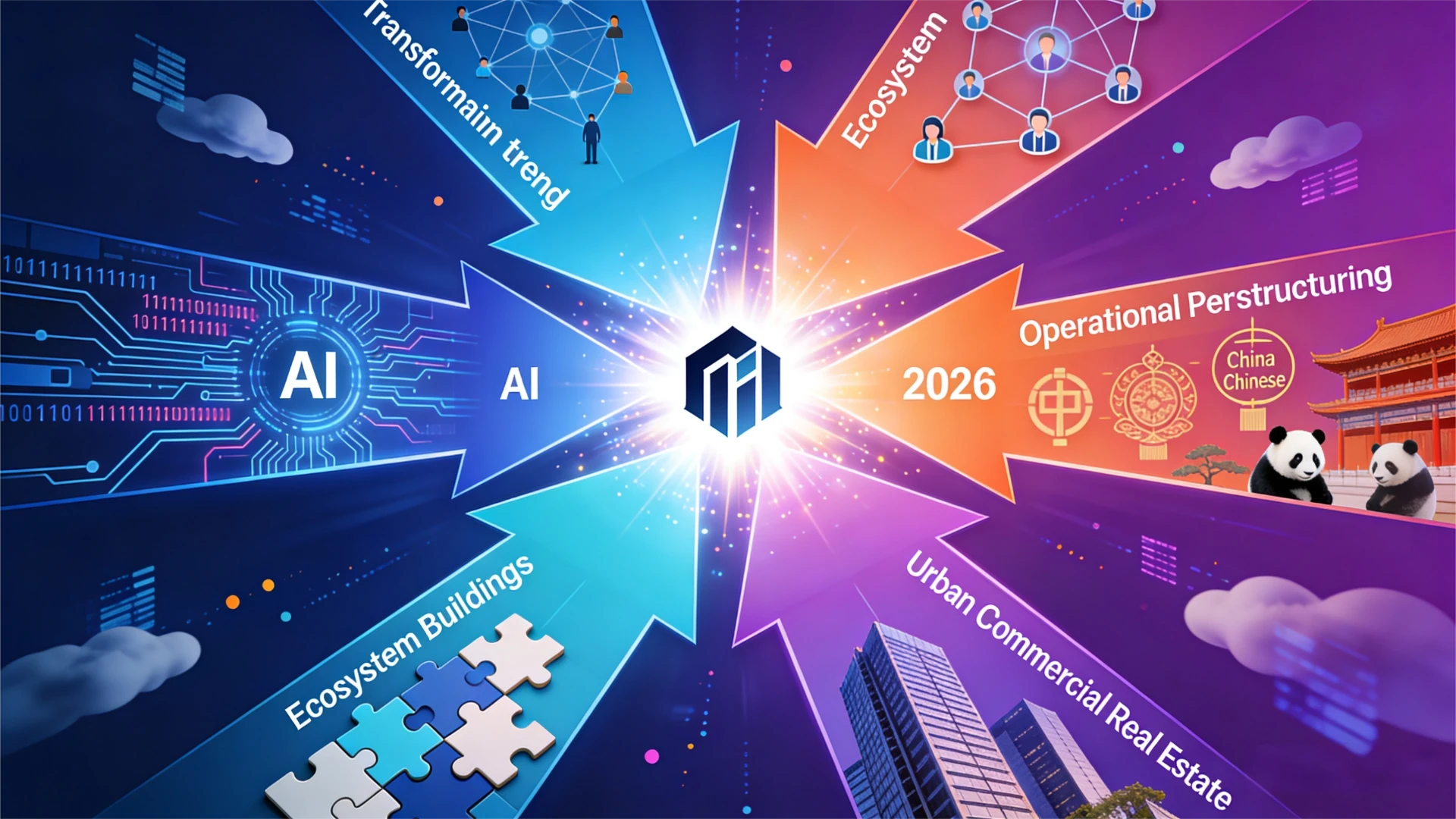
Five major transformation trends in business models will converge in 2026. Enterprises must leverage AI and ecosystem-building to restructure operations, empower urban commercial real estate to usher in a new era.

xd wang
Dec 9, 2025
xd wang
UI/UX Specialist
Framer & Aura template expert Helping founders launch websites in 7 days. Google-certified UX designer focused on high-conversion templates. Exclusive template
Follow Author
Related Posts


Introduction: 2026 – A Critical Turning Point Year for Business Model Transformation
Looking back over the past decade as we stand at the end of 2025, we have witnessed the accelerated evolution of business models. From the mobile internet reshaping the retail landscape, to the platform economy giving rise to the sharing economy wave, and the pandemic forcing enterprises to undergo digital transformation, each technological revolution has reshaped the underlying logic of value creation. 2026 is becoming another key turning point in the industry's consensus—not only because artificial intelligence has leaped from an "experimental tool" to a "strategic engine," but also because the convergence of multiple trends is driving structural changes in business models.
Gartner's strategic forecast indicates that 2026 will witness the profound impact of AI on business decisions, operations, and strategies, changes that are often underestimated in terms of speed and depth. At the same time, Forbes' research emphasizes that AI agents, cybersecurity pressures, ESG repositioning, and the growing focus on AI skills will reshape how businesses operate. These predictions are not isolated, but intertwined, jointly driving the leap from "incremental optimization" to "paradigm shift."
Examining the Wei-Zhu business model's six-element framework, the transformation in 2026 is simultaneously reconstructing positioning, business systems, profit models, key resource capabilities, cash flow structure, and corporate value. Of particular note is the replacement of the traditional "static design" mindset of business models with a "dynamic evolution" logic. As we revealed in our previous research, "The Value Co-creation Paradigm of Business Model Innovation," business models have shifted from "unilateral design" to "multilateral co-creation," and from "rigid structures" to "adaptive systems."
In the Chinese market, this transformation exhibits a unique characteristic of acceleration. According to data from China Research & Consulting, the Chinese digital transformation market continues to expand, with accelerated technological integration, deepened ecosystem reconstruction, and upgraded value creation becoming three significant features. At the same time, the platform economy is shifting from "traffic competition" to "ecosystem win-win", with the adult digital payment usage rate increasing from 49% to 89% and the proportion of people obtaining credit from formal financial institutions rising from 20% to 41%.
This report will systematically outline the five core trends in business model transformation in 2026, deeply analyze their multidimensional impact on corporate strategy, operating models, and value creation, and offer forward-looking insights based on practical experience in the Chinese market. In particular, we will explore how these transformation trends are reshaping the value logic of urban space and commercial real estate, providing empirical support for a "business model design revolution."
Trend 1: The AI Agent Revolution – From Tool Empowerment to Strategic Restructuring
Driving Force Analysis: The Dual Drive of Technological Maturity and Commercial Urgency
The most disruptive trend in 2026 will undoubtedly be the transition of AI agents from concept to large-scale commercial application. Unlike traditional AI tools that passively respond to instructions, AI agents possess the ability to make autonomous decisions, execute multi-step tasks, and invoke third-party services. Gartner predicts that by the end of 2026, 40% of enterprise applications will have built-in task-specific AI agents, a leap forward from less than 5% in 2025.
This shift is driven by three levels. First, on the technological level, the reasoning capabilities of large language models have reached a critical point, enabling AI to upgrade from "pattern recognition" to "logical deduction." Second, on the business level, enterprises face cost pressures and efficiency bottlenecks, urgently needing AI to take over highly repetitive and rule-based business processes. Third, on the competitive level, AI adoption has shifted from a "differentiated advantage" to a "survival necessity," and companies that do not adopt AI face the risk of being eliminated by the market.
It is worth noting that the rise of AI agents is not simply a matter of "machines replacing humans," but rather it has triggered a fundamental restructuring of organizational capabilities. Enterprises need to establish new workflows of "human-machine collaboration" and cultivate employees' AI literacy, which in turn drives changes in talent strategies and organizational structures.
Presentation format: From single-point optimization to end-to-end automation
In 2026, AI agents will be applied in three typical scenarios. First, in sales and customer service, AI agents will be able to autonomously analyze customer needs, recommend products, handle objections, and even negotiate pricing, requiring human intervention only at key decision-making points. Second, in supply chain and logistics, AI agents will monitor inventory in real time, predict demand fluctuations, and automatically trigger purchase orders, achieving end-to-end supply chain optimization. Third, in finance and human resources, from expense approvals to recruitment screening, AI agents will handle over 80% of routine tasks, freeing up human resources to focus on strategic work.
A more profound change is reflected in the emergence of "multi-agent collaboration platforms." Enterprises no longer deploy single AI tools, but instead build "AI workflow networks" composed of multiple specialized agents. Different agents are responsible for different stages, collaborating through standardized interfaces to complete complex tasks. This architecture greatly enhances the depth and breadth of automation, enabling enterprises to handle more complex business scenarios.
Impact on the six elements of a business model
Repositioning AI agents enable businesses to deliver service experiences that surpass the limits of human capabilities. For example, 24/7 global multilingual customer support, millisecond-level personalized recommendations, and predictive problem solving redefine the standard of "superior customer experience," forcing businesses to re-evaluate their position in the value chain.
Business system reengineering Traditional business systems are based on "human nodes + system support," while AI agent-driven business systems are "AI-led + human supervision." This not only changes the logic of business process design but also restructures the organizational structure—flattening and networking become inevitable trends because AI agents can efficiently collaborate across traditional departmental boundaries.
Profit model innovation AI agents create new profit possibilities. On the one hand, the cost structure is significantly improved, and the proportion of labor costs decreases, freeing up profit margins. On the other hand, AI capabilities themselves become monetizable assets, and companies can package well-trained AI agents as service products and offer them to external parties, opening up a new source of revenue from "AI as a Service" (AIaaS).
Key resource capability transfer In the era of AI agents, a company's core competitiveness has shifted from "the number of talents" to "AI governance capabilities." How to choose suitable AI tools, how to train customized agents, how to establish human-machine collaboration mechanisms, and how to mitigate AI risks have become new strategic capabilities. The value of data assets has also been redefined—no longer a static "data warehouse," but a dynamic "AI training fuel."
Cash flow optimization The deployment of AI agents requires upfront investment, but their extremely low marginal cost allows companies to rapidly expand their service capabilities without increasing corresponding variable costs. This "high fixed cost, low marginal cost" structure is conducive to scalable expansion, but it also requires companies to have stronger cash flow management capabilities to support initial investments.
Enterprise value leap The capital market is giving "AI-native" companies a higher valuation premium. Companies that can demonstrate a deep integration of AI into their business models, possess proprietary AI capabilities, and showcase AI-driven growth potential have significantly higher market capitalization multiples than their peers. This is prompting more companies to upgrade AI from a "technology project" to a "strategic transformation."
Case Study Insights: The Leap from Concept to Practice
Research by China Galaxy Securities points out that the deployment of Robotaxi by OEMs and tech giants demonstrates the application potential of AI agents in the real economy. This case reveals an important principle: the successful application of AI agents requires a closed loop of "scenario-data-algorithm". Enterprises need to identify high-value application scenarios, continuously accumulate scenario data, and iteratively optimize AI algorithms; all three are indispensable.
Another noteworthy practice comes from the fintech sector. Platform companies are using AI agents to achieve digital risk control and alternative data applications, significantly improving credit accessibility for long-tail customers. This demonstrates that AI agents can not only reduce costs, but also open up market spaces that are difficult to reach with traditional models, creating "non-zero-sum" value increments.
However, the application of AI agents also faces challenges. Gartner warns that by the end of 2026, there will be more than 2,000 lawsuits "dying from AI" due to insufficient AI risk protection measures. This requires companies to establish a sound AI governance framework while pursuing efficiency, including transparency mechanisms, accountability, and ethical review; otherwise, they will face legal and reputational risks.
Trend Two: The Leap from Platform Economy to Ecological Economy
Driving Force Analysis: A Paradigm Shift from Competition to Symbiosis
The platform economy has created enormous value over the past decade, but its "winner-takes-all" logic has also led to problems such as monopolies, data abuse, and stifling innovation. In 2026, we are witnessing a profound transformation of the platform economy into an ecosystem economy—from "centralized control" dominated by a single platform to "distributed collaboration" with multiple stakeholders.
The underlying driving force behind this transformation lies in the evolution of the value creation logic. The value of the traditional platform economy mainly comes from "connectivity efficiency"—capturing value by reducing transaction costs. However, as platforms become more widespread, the marginal value of connectivity itself diminishes, and companies must shift towards "value co-creation"—achieving value enhancement by empowering ecosystem participants. A report from the China Inclusive Finance Research Institute points out that the core value of the platform economy lies in using digital technology to reshape resource allocation efficiency, rather than simply monetizing traffic.
Changes in the policy environment are also driving this transformation. Regulatory agencies in various countries are strengthening antitrust scrutiny of platform companies, requiring them to open up data, protect user privacy, and treat merchants fairly. The issuance of China's "Opinions on Promoting the Standardized, Healthy, and Sustainable Development of the Platform Economy" marks the transition of platform governance from a stage of "unregulated growth" to a stage of "standardized development."
A deeper driving force comes from the awakening of consumers and ecosystem partners. Users are no longer satisfied with passively receiving services provided by the platform, but demand to participate in the value creation process; merchants are no longer willing to be merely "traffic receivers" of the platform, but seek more equal cooperative relationships. This "demand-driven" force compels platforms to redesign their business models.
Manifestation Form: From Closed Platforms to Open Ecosystems
The ecological economy in 2026 will exhibit three significant characteristics. First, Ecological openness Leading companies are no longer building closed "walled gardens," but instead opening up their core capabilities through APIs, SDKs, and open-source tools to attract third-party developers, service providers, and content creators to join their ecosystems. For example, the industrial internet platform COSMOPlat has connected a large number of devices and served numerous enterprises, forming a closed-loop ecosystem of "devices + data + services."
Second, Fairness of value distribution Emerging ecosystem platforms adopt more transparent revenue-sharing mechanisms to ensure that ecosystem participants receive returns commensurate with their contributions. The practices of the "Shared Prosperity" platform are noteworthy: through the "AI intelligent matching + supply and demand matching + transformation and upgrading" model, it has achieved a win-win situation for science and technology innovation industries, basic industries, and service institutions, with the number of enterprises joining the platform exceeding 3,000.
Third, Democratization of governance Traditional platforms unilaterally set the rules, while the ecological economy advocates "co-construction, co-governance, and sharing." For example, the "Renrun Wanfang" platform adopts an open architecture, where participants are not only service users but also rule setters, participating in platform governance through mechanisms such as member meetings and community voting.
Impact on the six elements of a business model
*Location extension **The positioning of enterprises has expanded from "product/service provider" to "ecosystem coordinator". Successful ecosystem enterprises do not aim to monopolize value, but are committed to "making the pie bigger" - by empowering ecosystem partners, expanding the overall market size, and then obtaining a reasonable share from the incremental growth. This positioning shift requires enterprises to have a stronger strategic vision and ecosystem thinking.
*Business system ecosystem **Business systems are no longer linear processes within an enterprise, but rather value networks across organizations. Enterprises need to build a three-tier architecture of "core + interface + ecosystem": the core is core capabilities, the interface is a standardized collaboration interface, and the ecosystem is a network of external partners. The focus of business system design has shifted from "process optimization" to "interface design" and "ecosystem governance."
*Diversified profit models **The ecological economy has spawned diversified profit models. Besides traditional transaction commissions, these include data service fees, capability licensing fees, ecosystem service fees, and value-added service fees. More importantly, "network effects" and the "data flywheel" have become the core drivers of profitability—the more prosperous the ecosystem, the richer the data, and the greater the platform value, forming a positive cycle.
*Key resource capability restructuring **The core competencies of ecosystem-based enterprises are shifting from "operational efficiency" to "ecosystem empowerment." Specifically, this includes: ecosystem design capabilities (how to attract and retain high-quality partners), platform governance capabilities (how to balance the interests of multiple parties), data intelligence capabilities (how to extract value from ecosystem data), and ecosystem service capabilities (how to provide partners with tools, training, funding, and other support).
*Cash flow structure optimization **The cash flow characteristics of an ecosystem economy are "multi-source and rolling growth." Compared to a single business model, ecosystem-based enterprises have more diversified revenue streams and stronger risk resistance. At the same time, the investment of ecosystem partners (such as technology development and content creation) reduces the platform's capital expenditure and improves its cash flow structure.
Enterprise value multiplied The capital market assigns a "network effect" premium to ecosystem-based companies. The value of a successful ecosystem platform lies not only in the discounted value of its current revenue but also in the option value of future ecosystem expansion. This explains why some platform companies with seemingly average profitability can obtain high valuations.
Case Study Insights: The Secret to Ecological Prosperity
The "Shared Meeting Room for Ten Thousand Enterprises" case demonstrates the core logic of the ecological economy. This platform breaks down information barriers and integrates cross-industry resources, realizing a value cycle from "managing people" to "empowering people" and then to "sharing people" through the concept of "talent capitalization." Its success hinges on building five major barriers: a three-tiered value cycle, integration of scarce resources, supply chain advantages, a technological moat, and a commitment to social responsibility.
Another typical example is the application of the platform economy in rural revitalization. By breaking down barriers to the flow of factors of production between urban and rural areas and promoting the branding of agricultural products, the platform economy is becoming an important engine for rural industrial revitalization. This demonstrates that the value of ecological economics lies not only in commercial returns, but also in the creation of social value—by connecting neglected markets, empowering vulnerable groups, and achieving inclusive growth.
However, building an ecological economy is no easy task. It requires companies to abandon short-term profit maximization and instead invest in long-term ecological health; it requires companies to shift from a "zero-sum game" mentality to a "positive-sum game" mentality, cooperating and achieving win-win results with competitors in certain areas; and it requires companies to establish complex governance mechanisms to balance the internal conflicts of interest within the ecosystem. Only those companies that truly understand that "ecological prosperity is platform prosperity" will be able to prevail in the competition in 2026 and beyond.
Trend 3: Sustainability is moving from the periphery to the core
Driving Force Analysis: From Moral Duty to Strategic Necessity
By 2026, sustainability will no longer be a "nice-to-have" for businesses, but a strategic cornerstone for their survival. This shift stems from the convergence of three pressures. First, **Climate risks become visible **Frequent extreme weather events and exacerbated resource shortages pose direct physical risks to businesses, such as supply chain disruptions, rising operating costs, and asset impairment, forcing them to incorporate sustainability into their risk management frameworks.
Secondly, **Regulatory standardization accelerates **Countries are accelerating the development of regulations such as carbon emission disclosure and ESG reporting, and non-compliant companies will face fines, financing restrictions, and market access barriers. China's "Suggestions on Formulating the 15th Five-Year Plan for National Economic and Social Development" explicitly requires improving regulation and promoting the innovation and healthy development of the platform economy, with sustainable development being an important dimension.
Third, **Market value reassessment **The preferences of investors, consumers, and employees are undergoing profound changes. Companies with higher ESG ratings have lower financing costs, higher brand premiums, and stronger talent attraction. Sustainability Online predicts that by 2026, the private sector will surpass government regulation to become the main force driving sustainable development, with consumer demand and corporate resilience requirements being key drivers.
Forms of expression: From formal compliance to value embedding
In 2026, corporate sustainability practices will take on three levels. First layer: Greening at the operational level Enterprises are adopting clean energy, circular materials, and energy-saving equipment on a large scale to reduce their carbon footprint at the source. For example, data centers (critical infrastructure in the AI era) face enormous energy consumption pressure, and the energy consumption of AI-driven data centers is expected to double by 2026. Leading companies are addressing the challenges by using renewable energy, optimizing cooling systems, and deploying high-efficiency chips.
Second layer: Sustainable design at the product level Enterprises integrate sustainability into the entire product lifecycle, systematically reducing environmental impact from material selection, production processes, packaging and transportation to recycling and reuse. With the rise of the "circular economy" model, enterprises no longer sell products but provide "products as a service," retaining ownership of the products and being responsible for maintenance and recycling, thereby maximizing resource utilization efficiency.
The third level: strategic-level model innovation A few pioneering companies have used sustainability as a starting point for business model innovation, opening up entirely new markets. For example, emerging industries such as carbon management services, green finance products, and climate adaptation technologies are experiencing rapid growth. Companies no longer view sustainability as a cost center, but have discovered a "green premium"—consumers are willing to pay higher prices for sustainable products, and investors give green companies higher valuations.
It is noteworthy that technological innovation is reducing the cost of sustainable practices. AI technology can optimize energy use, reduce material waste, and predict equipment failures, helping companies improve economic efficiency while enhancing sustainability. A joint study by Capgemini and Microsoft indicates that agentic AI can help organizations reduce waste, optimize processes, and embed sustainability into operations on a large scale.
Impact on the six elements of a business model
Positioning upgrade Sustainability has become a key component of brand positioning. Consumers are increasingly inclined to support "responsible companies" rather than simply pursuing product features and prices. Companies need to clearly communicate their sustainability value proposition in their positioning, telling the story of "why our existence makes the world a better place."
Greening of business systems Business system design must consider environmental impact. Supplier selection should no longer be based solely on price and quality, but also on assessing their sustainability performance; logistics network design should optimize transportation routes to reduce carbon emissions; and production processes should adopt clean technologies to reduce pollution. This requires companies to establish a "sustainability dashboard" to monitor and optimize the environmental performance of their business systems in real time.
Profit model transformation Sustainability has opened up new avenues for profitability. On the one hand, the premium pricing power of green products increases profit margins; on the other hand, the circular economy model creates new sources of revenue (such as product leasing, secondary market transactions, and material recycling). Furthermore, financial instruments such as carbon credit trading and green bonds provide enterprises with new financing and revenue-generating channels.
Key resource capability reshaping Sustainability has become a core competency. Companies need to cultivate capabilities in sustainable supply chain management, life cycle assessment, carbon accounting, and green innovation. The Chief Sustainability Officer (CSO) is no longer a symbolic position, but a key role in strategic decision-making, responsible for integrating sustainability with business strategy.
Long-term perspective on cash flow Sustainable investments typically take a long time to generate returns, requiring companies to adopt a longer-term cash flow assessment perspective. In the short term, greening may increase capital expenditures; however, in the long run, the benefits of improved energy efficiency, reduced risk, and enhanced brand value will outweigh the initial investment. Companies need to clearly communicate this logic to investors to gain their support for sustainable investments.
Enterprise valuation Capital markets are increasingly emphasizing sustainability. Companies with higher ESG ratings often enjoy lower costs of capital and higher valuation multiples. As climate risk is incorporated into asset pricing models, companies that neglect sustainability will face valuation discounts or even the risk of "stranded assets" (such as the depreciation of fossil fuel-related assets).
Case Study Implications: Sustainable Commercialization Pathways
InnoEdge's collaborations with leading companies demonstrate how sustainability and innovation can be combined. Through "AI design thinking," businesses can identify sustainability challenges, rapidly prototype solutions, and create innovations that have both commercial and social value. The key to this approach lies in "empathy research"—a deep understanding of the needs of stakeholders (including the environment) and designing solutions based on this understanding.
In China's commercial real estate sector, sustainability is reshaping the logic of project development. Green building certification is no longer an option, but a prerequisite for financing and attracting tenants; the application of energy-saving and emission-reduction technologies can significantly reduce operating costs and increase asset value; and healthy space standards (such as WELL certification) have become a competitive advantage in attracting high-quality tenants.
However, the sustainable transformation also faces the risk of "greenwashing." Companies that exaggerate their sustainability achievements, selectively disclose information, and use misleading labels may gain short-term public relations benefits, but will inevitably damage their brand reputation in the long run. By 2026, with stricter ESG disclosure standards, improved third-party certification systems, and increased media and NGO oversight, "greenwashing" companies will have nowhere to hide. Only companies that truly integrate sustainability into their strategies and operations can earn lasting trust.
Trend 4: The Rise of Adaptive Business Models
Driving force analysis: Coping with the normalization of uncertainty
If businesses in the past faced "occasional black swans," then the business environment in 2026 is a "persistent gray rhino"—uncertainty is no longer an anomaly, but the new normal. Geopolitical conflicts, supply chain fragility, rapid technological iteration, and volatile consumer preferences—these factors combined have rendered the traditional "five-year strategic planning" model ineffective.
Businesses are beginning to realize that business models can no longer be static designs that can be implemented once and for all, but must be dynamic systems that evolve continuously. An analysis by ByTheMag indicates that by 2026, adaptive business models will define the winners, and companies that can turn volatility into a strategic advantage will dominate the market. This requires companies to shift from a linear "plan-execute" mindset to an agile "perception-response" mindset.
Technological advancements have made adaptability possible. Technologies such as cloud computing, microservice architecture, and the API economy enable enterprises to quickly restructure their business modules; AI and big data analytics allow enterprises to gain real-time insights into market changes; and methodologies such as agile development and lean startup guide enterprises to rapidly iterate through trial and error. The maturity of these tools and methods has turned "adaptability" from an ideal into reality.
Manifestations: From rigid structures to flexible systems
The adaptive business model in 2026 exhibits four typical characteristics. First, modular design Businesses are breaking down their operations into independently operable and flexibly combinable modules. For example, product lines are no longer single SKUs, but consist of a core platform plus optional modules, which customers can customize according to their needs; organizational structures are no longer fixed departments, but project-based teams, dynamically formed according to tasks. This modular approach enables businesses to quickly adjust their business portfolio and adapt to market changes.
Second, real-time data driven Enterprises establish a closed-loop system of "perception-analysis-decision-execution," collecting data in real time through IoT devices, customer touchpoints, market monitoring, and other channels. They then use AI for analysis, automatically or in conjunction with management to make decisions and quickly implement adjustments. This data-driven decision-making model significantly shortens the "problem discovery-problem solution" cycle.
Third, ecological resource allocation Enterprises no longer attempt to own all resources, but instead utilize them on demand through an ecosystem network. Talent is employed through a "core team + flexible staffing" model, production capacity is rented on demand via cloud manufacturing platforms, and funding is accessed in real-time through supply chain finance. This asset-light model enhances enterprises' ability to cope with fluctuations in demand.
Fourth, a culture of continuous experimentation. The company treats new businesses as "experiments" rather than "gambles," using MVP (Minimum Viable Product) to quickly test market response, iterating and optimizing based on feedback, or decisively abandoning the venture. Failure is no longer shameful, but a learning opportunity. This culture encourages innovation and reduces the cost of trial and error.
Impact on the six elements of a business model
Dynamic positioning A company's positioning is no longer static but dynamically adjusted according to market evolution. For example, many catering companies quickly transformed into takeout + retail during the pandemic, and then adjusted to dine-in + experience after the pandemic. The key is to identify the "unchanging core" (such as brand value and core competencies) and the "variable extension" (such as product form and service method), and flexibly adjust the extension while maintaining a stable core.
*Business systems can be reconfigured **The business system adopts a "Lego-like" architecture, with each link connected through standard interfaces, allowing for rapid additions, deletions, and adjustments. For example, the supply chain employs a multi-source strategy, enabling quick switching to alternative solutions when a supplier encounters a problem; the sales channels utilize an omnichannel strategy, flexibly combining online and offline channels, as well as self-operated distribution, and dynamically adjusting resource allocation based on channel performance.
*Diversified profit models **A single profit model is less resilient to risk, so adaptable companies often cultivate multiple profit pillars. For example, they may have product sales revenue, service subscription revenue, and data monetization revenue. Different revenue sources have different cycles and risk characteristics, and combining them improves overall stability. At the same time, maintaining the convertibility of the profit model allows for a quick shift to other models when one model encounters a bottleneck.
*Flexibility of key resource capabilities **The core competencies of adaptive enterprises are shifting from "depth of specialization" to "breadth of integration." The key is not to excel in a single field, but to quickly learn new areas, integrate external resources, and coordinate cross-disciplinary collaborations. Therefore, learning ability, ecosystem coordination ability, and rapid execution ability become crucial. Talent strategies are also shifting from "cultivating experts" to "cultivating T-shaped talent" (possessing both professional depth and cross-disciplinary breadth).
*Cash flow buffer mechanism **Adaptable companies place greater emphasis on the safety margin of cash flow. On the one hand, they maintain ample cash reserves to cope with unforeseen circumstances; on the other hand, they establish flexible financing mechanisms to ensure rapid access to funds when needed. Furthermore, they enhance cash flow flexibility by adopting asset-light models, shortening cash conversion cycles, and optimizing accounts receivable and payable management.
*Enterprise Value Resilience Premium **Investors are increasingly valuing a company's "resilience." Companies that can demonstrate the adaptability of their business models and their resilience during crises will receive a "resilience premium." This premium is reflected not only in valuation multiples but also in financing conditions—banks and investment institutions are more willing to support resilient companies.
Case Study Insights: Practical Wisdom of Adaptability
A Bank of America survey of business owners shows that 91% of business owners plan to adopt digital tools in the next five years, 77% have already integrated AI into some of their operations, 52% plan to maintain stable employment levels, and 43% plan to hire. These data suggest that the strategy of adaptive enterprises is "stability amid change"—maintaining organizational stability while actively embracing technological change.
In the Chinese market, the transformation practices of the commercial retail industry have provided valuable experience. Faced with challenges such as consumer segmentation, the diversion of offline customer traffic, and intensified price wars, successful companies have adopted the following approaches: first, exploring new markets (such as instant retail and overseas expansion); second, identifying new demands (such as emotional value and practical value); and third, building platform mechanisms to continuously explore new opportunities through internal and external growth.
However, adaptability is not the same as blindly chasing trends. Companies need to find a balance between "strategic consistency" and "tactical flexibility." Strategically, this means adhering to core values, goals, vision, and core competencies; tactically, it means flexibly adjusting specific practices such as products, channels, and marketing. Companies that lose their way during crises and frequently change their strategies often find themselves in even greater difficulties. The essence of adaptability is "adhering to the core amidst change, and flexibly adapting based on the core."
Trend 5: Digital transformation enters a deeper phase
Driving Force Analysis: From Digital Tools to Digital Mindset
After years of development, enterprise digital transformation has evolved from the question of "whether to do it" to the challenge of "how to do it deeply and thoroughly". In 2026, digital transformation entered the "deep water zone", showing three new characteristics: accelerated technology integration, deepened ecosystem reconstruction, and upgraded value creation.
The forces driving this deepening come from multiple dimensions. First, **The maturity and integration of technology stacks **While individual technologies such as 5G, AI, blockchain, and IoT are relatively mature, the focus in 2026 will be on the cross-application of these technologies. For example, "5G + AI" supports real-time visual inspection, "blockchain + IoT" enables end-to-end supply chain traceability, and "cloud computing + edge computing" balances cost and performance. This integration creates exponential value increments.
Secondly, **Accelerating the Assetization of Data **Enterprises are beginning to view data as a business asset, establishing new businesses such as data products, data trading, and data services. The key lies in improving data governance capabilities—ensuring that data is accurate, controllable, and applicable to machine learning. Data infrastructure has been upgraded from a "dashboard" to a comprehensive platform that simultaneously supports AI, analytics, and real-time decision-making.
Third, **The organization's digitalization level is deepening **Digitalization is no longer limited to front-end processes such as marketing and customer service, but has penetrated the entire value chain, including R&D, production, supply chain, and finance. Even more profoundly, it has led to the digitalization of organizational culture—the concepts of data-driven decision-making, agile iteration, and cross-departmental collaboration have taken root, transforming digitalization from "an IT department's responsibility" into "a responsibility for everyone."
Manifestations: From local optimization to system refactoring
The practice of digital transformation in 2026 will present three levels of deep-water aspects. First layer: Smart factories and the Industrial Internet Manufacturing is the main battleground for digital transformation. Provincial-level and above industrial internet platforms have achieved full coverage of major industrial categories, forming a "basic-advanced-excellent" smart factory cultivation system. An equipment manufacturing company has integrated supply chain data through a platform to achieve intelligent scheduling of global orders, resulting in a significant increase in capacity utilization. The application of technologies such as IoT devices, digital twins, and predictive maintenance has enabled the factory to shift from "passive response" to "proactive prediction."
*Second layer: Omnichannel retail and precision marketing **The retail and consumer industries are reshaping the relationship between "people, goods, and place" through digitalization. Online and offline integration allows consumers to browse, compare prices, purchase, and return items at any touchpoint, enjoying a seamless experience. Big data-driven precision marketing is no longer about casting a wide net for traffic acquisition, but about customized outreach to specific customer segments. Emerging channels such as live streaming, short videos, and social e-commerce are rapidly rising, becoming new engines for traffic growth.
*Third layer: Industrial Internet and supply chain collaboration **Digitalization breaks down enterprise boundaries, enabling digital collaboration across the entire industry chain. For example, OEMs, parts suppliers, and dealers in the automotive industry share demand forecasts, inventory information, and logistics status through industrial internet platforms, achieving "production based on sales, zero inventory, and on-time delivery." This collaboration not only improves efficiency but also restructures the industry's division of labor—shifting from "vertical integration" to "horizontal specialization + digital collaboration."
The application of digital twin technology deserves special attention. By 2026, digital twins will have evolved from simulating isolated systems to modeling entire processes, factories, and even organizations. Enterprises can test new product designs, optimize production processes, and rehearse contingency plans in virtual spaces, significantly reducing trial-and-error costs and accelerating the innovation cycle.
Impact on the six elements of a business model
Positioning digitization Digital channels have become the primary way for businesses to reach customers, and their market positioning must be effectively communicated in the digital space. This is not just about opening an official website and social media accounts, but about how to gain visibility and influence through algorithmic recommendations, search rankings, and the content ecosystem. "Digital brand assets" (such as search index, social media buzz, and content influence) have become an important component of positioning.
Business system digitization Business processes are automated, intelligentized, and visualized through digitalization. For example, order processing has shifted from manual entry to automatic system identification, inventory management from periodic stocktaking to real-time monitoring, and quality control from sampling inspection to fully digital traceability. More importantly, digitalization generates data at every stage of the business system, and this data, in turn, drives the continuous optimization of the business system, forming a "data flywheel."
Profit model innovation Digitalization is giving rise to new ways to generate revenue. Subscription models (SaaS) replace one-time sales, providing continuous services and generating stable cash flow; data monetization involves providing the data accumulated by enterprises (under compliance) to third parties to generate revenue; and digital products digitize physical products (such as software, content, and virtual goods) to break through physical constraints and achieve near-zero marginal cost expansion.
Digitalization of key resource capabilities The core capabilities of the digital age include data assets, digital technologies, and digital talent. Enterprises need to establish a data platform to manage and mine the value of data in a unified manner; master core technologies such as cloud computing, AI, and blockchain, or acquire technical capabilities through cooperation; and cultivate compound talents who understand both business and technology, especially for scarce positions such as data scientists, product managers, and digital transformation experts.
Digital cash flow management Digital tools enable more precise and real-time cash flow management. Businesses can monitor cash inflows and outflows in real time through ERP and financial systems, predict future cash flow trends using AI, and achieve rapid turnover of accounts receivable and payable through supply chain finance platforms. The widespread adoption of digital payments has also reduced transaction costs and accelerated capital turnover.
Digital Value Premium for Enterprises Companies with a high degree of digitalization often enjoy a valuation premium. This is because digitally-driven companies have lower marginal costs, greater scalability, higher data asset value, and more imaginative business models. Investors view digital capabilities as a proxy for a company's "future competitiveness" and are willing to pay a premium for them.
Case Study Insights: Breakthrough Paths in Deep Waters
Fuzhou's experience as one of the first pilot cities for digital transformation of small and medium-sized enterprises in China is worth learning from. Through policies such as the "Eight Measures of Fuzhou City for Promoting Digital Transformation of Industry," it has driven traditional industries towards intelligent and green development. The government's role has shifted from "direct investment" to "platform building + policy guidance," creating a favorable ecosystem for enterprises' digital transformation.
The digital transformation of the financial industry also offers important insights. The solicitation of opinions on the "Standards for the Stability Assurance System of Information Systems in the Securities Industry" marks the industry's shift from "technology support" to "value leadership." This indicates that digital transformation is not just a technological upgrade, but also a systemic change in business models, organizational structures, and risk management.
However, the transformation into the deeper digital realm faces even greater challenges. First, there's the issue of investment; deep digitalization requires substantial capital and long-term commitment, often beyond the reach of small and medium-sized enterprises (SMEs). Second, there's the talent issue; digital talent is in short supply, leading to high labor costs. Third, there's resistance to organizational change; digitalization impacts existing interests and can easily trigger internal resistance. Companies need unwavering determination from top management, sufficient resource investment, and a gradual implementation strategy to successfully navigate this challenging phase.
Analysis of the Special Characteristics of the Chinese Market
Amid the global wave of business model transformation, the Chinese market exhibits unique characteristics and rhythms, which warrant dedicated analysis.
A dual-engine approach driven by policy and market forces
A notable characteristic of China's business model transformation is the synergistic effect of policy and the market. On the one hand, the government guides the direction of transformation through industrial policies, fiscal subsidies, and pilot demonstrations. For example, pilot cities for digital transformation, smart manufacturing demonstration factories, and guidelines for the standardized development of the platform economy are all shaping the transformation path.
On the other hand, China's massive market size and intense competitive pressure have created a powerful market driving force. To survive and thrive, companies must innovate rapidly and iterate continuously. This "forced innovation" has enabled Chinese companies to demonstrate exceptional vitality and speed in business model innovation. Platform economy, sharing economy, new retail, and many other innovative models have been pioneered and widely adopted in China.
Leading advantages in digital infrastructure
China is a global leader in digital infrastructure such as mobile payments, e-commerce logistics, and 5G networks, providing fertile ground for business model innovation. By 2025, the digital payment usage rate among Chinese adults will reach 89%, far exceeding the global average. This infrastructure advantage enables some business models that are difficult to implement in other countries to be quickly implemented and promoted in China.
For example, the prosperity of models such as instant retail (30-minute delivery), community group buying, and live-streaming e-commerce all rely on the support of a robust logistics network and digital payment system. This "infrastructure dividend" will continue to play a role in 2026, spurring more local innovation.
Consumer stratification and diversified needs
Another characteristic of the Chinese market is the significant consumer segmentation. First-tier cities prioritize quality and experience, while third- and fourth-tier cities focus on cost-effectiveness, indicating huge potential in lower-tier markets. This multi-tiered demand provides room for different business models with varying positioning, but also requires companies to have the ability to operate multiple models simultaneously.
Research in the social services industry indicates that service consumption outperforms goods consumption, tourism demand remains robust, and emotional value, time efficiency, and cost-effectiveness are the three key factors influencing travel decisions. This indicates that Chinese consumers' demands are shifting from material needs to spiritual and experiential ones, and businesses need to adjust their value propositions accordingly.
Rural revitalization and coordinated regional development
In 2026, the rural revitalization strategy will continue to advance, opening up new avenues for business model innovation. The application of the platform economy in rural areas is breaking down barriers to the flow of factors of production between urban and rural areas, promoting the branding of agricultural products, and empowering rural industrial revitalization.
This is not only a social responsibility but also a business opportunity. Rural e-commerce, rural tourism, specialty agricultural products, and county-level commerce hold enormous potential. Nine departments have issued a document proposing to create approximately 500 "leading counties" in county-level commerce by 2025. Those companies that can combine advanced business models with the realities of rural areas will be the first to seize this blue ocean market.
The trend towards standardization of the regulatory environment
After a period of rapid expansion, China's platform economy has entered a stage of regulated development. A series of regulatory measures, including those concerning anti-monopoly, data security, algorithm governance, and consumer protection, have been introduced, reshaping the operational boundaries of platform companies.
While stricter regulations may increase compliance costs in the short term, they are beneficial to the healthy development of the industry in the long run. They force companies to shift from "wild growth" to "refined operations," from "traffic-driven" to "value creation," and from "winner-takes-all" to "ecosystem win-win." Those companies that proactively adapt to regulations and embed compliance into their business models will gain a competitive advantage in this new phase.
Implications for urban space and commercial real estate
Business model transformation not only reshapes corporate operations but also profoundly changes the form and value logic of urban space and commercial real estate. This is highly consistent with our core viewpoint in the research "Urban Spatial Restructuring Driven by Business Model Innovation"—the business model is the "cause," and spatial dynamics are the "effect."
From functional zoning to scene integration
Traditional urban planning follows the principle of functional zoning: commercial areas, office areas, residential areas, and industrial areas are clearly separated. However, the business model transformation in 2026 is breaking down these boundaries. Online work is merging office and residential spaces; "community commerce" is emerging, integrating shopping, dining, entertainment, social interaction, and education within communities; industrial parks are no longer purely production spaces, but rather integrated "industry-city" complexes that combine office, R&D, living, and leisure.
This integration places new demands on spatial design: spaces need to be more adaptable and variable, and be able to flexibly transform their functions; spaces need to create "scenes" rather than simply provide "area", attracting people through atmosphere, experience, and social interaction; spaces need to embed digital infrastructure, such as 5G networks, smart sensors, and interactive screens, to support the operation of digital business models.
A commercial real estate industry report points out that business integration will become a significant trend in the future, with the boundaries between work, life, and consumption scenarios gradually blurring, and mixed-use development models becoming more common. This confirms our judgment: space is shifting from a "single-function container" to a "multi-scene carrier".
From static assets to dynamic platforms
The traditional profit model for commercial real estate is relatively simple: development, sales, or leasing to obtain one-time or long-term rental income. However, under the new business model, physical space is evolving into a "platform" that connects tenants, consumers, service providers, content creators, and other stakeholders, creating network effects.
For example, "curated commerce" treats the space as a curatorial platform, constantly introducing new brands, activities, and content to maintain a sense of freshness; "community-based commerce" builds community spaces around specific groups (such as parents and children, sports, and art enthusiasts) to strengthen a sense of belonging; and "incubation-based commerce" provides low-cost trial and error spaces for startup brands to cultivate an ecosystem.
This shift requires commercial real estate operators to move from a "landlord mindset" to a "platform mindset": not simply renting out space, but providing systematic services; not pursuing maximum rent, but pursuing a thriving ecosystem; not passively waiting for quality tenants, but proactively incubating and empowering them. The profit model also shifts from single rental income to a combination of rent + service fees + data monetization + equity investment.
From standardized replication to localized innovation
In the past, the logic behind successful commercial real estate projects was "standardized replication": find a successful template and quickly replicate it in different cities. But the trend in 2026 is "localized innovation": fully explore the culture, history, and community characteristics of the project location to create a unique spatial experience.
Behind this shift lies a change in consumer demand. The new generation of consumers is no longer satisfied with monotonous shopping malls, but seeks unique spaces with stories to tell and that evoke emotional resonance. The popularity of "Instagrammable" spots perfectly reflects this demand.
In practice, some projects have successfully created differentiated brands by revitalizing historical buildings, integrating local art, and telling community stories. For example, Panlong Tiandi "renews the old" by activating the genes of ancient towns in Jiangnan with a business logic. This localization is not simply "retro," but rather an organic combination of traditional elements and modern business logic to create new value.
From shopping venues to lifestyle centers
The core function of traditional commerce is "transaction"—consumers come to shop, complete the transaction, and leave. But by 2026, successful commercial spaces are transforming into "lifestyle centers"—people come here not only to shop, but more importantly, to socialize, relax, learn, experience, and even work.
This transformation requires commercial spaces to increase the proportion of experiential businesses (such as catering, entertainment, culture, and education) and reduce pure retail businesses; provide "third spaces" (social spaces outside of home and office), equipped with comfortable public rest areas, free Wi-Fi, and shared office corners; and host a variety of activities and content, such as art exhibitions, concerts, workshops, and community gatherings, to activate the spaces.
The commercial complex industry report emphasizes that experiential consumption, themed commerce, and the creation of social spaces have become key to differentiated competition. The proportion of traditional retail continues to decline, while the proportion of experiential formats such as leisure and entertainment, parent-child education, and health and wellness has increased significantly.
From existing property transformation to value reshaping
With new development slowing down, optimizing and upgrading existing assets has become the main theme of the industry. However, "transformation" is not a simple renovation, but a redesign of the business model, a redefinition of the value proposition, and a rebuilding of operational capabilities.
For example, transforming old office buildings into creative parks requires understanding the characteristics of the creative industry and providing flexible spaces, collaborative facilities, and a creative atmosphere; transforming traditional department stores into experiential shopping centers requires introducing new business formats, reconstructing circulation routes, and strengthening interaction; upgrading community shops into "life centers at your doorstep" requires integrating convenient services, creating a sense of community, and establishing digital connections.
The key to this value reshaping lies in "business model first." Before renovation, it is necessary to conduct in-depth research on the changing needs of the target customer group, the evolution of the business ecosystem, and the new possibilities of technological empowerment. Based on this, a new business model is designed and then transformed into a space renovation plan. Renovation projects that only focus on superficial changes and lack the support of innovative business models often fail to achieve sustained success.
Strategic Recommendations and Future Outlook
Strategic advice for enterprises
In response to the business model transformation trend expected in 2026, companies should adopt the following strategies:
First, establish a "dual-mode organization". Simultaneously run two systems: one responsible for optimizing existing business, pursuing efficiency and stability; the other exploring new business, encouraging experimentation and fault tolerance. Avoid subjecting innovative businesses to the processes and culture of the existing organization, giving them independent resources and space.
Second, cultivate "ecological thinking". Don't try to go it alone; instead, actively build or join ecological networks. Identify key partners in the ecosystem and establish mutually beneficial partnerships; open up your core capabilities to empower ecosystem partners; participate in ecosystem governance and promote the establishment of fair and transparent rules.
Third, invest in "adaptability". Allocate some resources to enhance organizational adaptability: establish market monitoring and rapid response mechanisms, cultivate employees' learning and cross-disciplinary capabilities, maintain business modularity for flexible adjustments, and maintain financial buffers to cope with uncertainty.
Fourth, embrace the "AI-first strategy". Don't view AI as a mere icing on the cake, but rather as an opportunity to strategically restructure your business model. Systematically assess which business processes can be AI-enabled, boldly deploy AI agents, and simultaneously establish an AI governance framework to mitigate risks. Prioritize the accumulation and management of data assets, because data is the fuel for AI.
Fifth, we must delve deeper into "sustainability". Elevate sustainability from a "public relations issue" to a "strategic pillar." Systematically assess the environmental and social impact of corporate operations, and formulate clear sustainability goals and roadmaps; integrate sustainability into all aspects of product design, supply chain management, and brand communication; proactively disclose sustainability information and build trust with stakeholders.
Recommendations to policymakers
The government plays a crucial role in driving business model transformation; recommendations include:
First, improve digital infrastructure Continue to invest in new infrastructure such as 5G, computing centers, and the industrial internet to lower the barriers to digital transformation for enterprises. Pay special attention to SMEs and underdeveloped regions to prevent the widening of the "digital divide."
Second, optimize the regulatory framework. Balancing innovation encouragement with risk prevention is crucial to avoid stifling innovation through "one-size-fits-all" regulation. For emerging business models, pilot programs such as "regulatory sandboxes" should be implemented; for mature sectors, clear rules should be established to enhance predictability. Key issues such as data security, algorithmic fairness, and platform monopolies should be given special attention.
Third, support the transformation of small and medium-sized enterprises. Large enterprises often have the capacity for independent transformation, while SMEs require more support. It is recommended to provide digital transformation consulting services, technology empowerment platforms, and dedicated funding subsidies; and to encourage large enterprises to open up their ecosystems to drive the common development of SMEs.
Fourth, promote talent cultivation. Ultimately, business model transformation requires talent. We need to strengthen education and training in areas such as digitalization, AI, and sustainability; encourage industry-academia-research collaboration to align educational content with industry needs; and improve talent mobility mechanisms to attract global talent.
Future Outlook: Long-Term Trends in Business Model Evolution
Looking ahead to 2026 and beyond, the evolution of business models will exhibit the following long-term trends:
From transaction-oriented to relationship-oriented Businesses are increasingly focusing on building long-term relationships with customers, rather than one-off transactions. The rise of subscription models, membership programs, and community-based operations reflects this shift. In the future, a company's core asset will be "customer relationships," not "products."
From asset ownership to capability utilization In the era of the "Internet of Everything," enterprises do not need to own all resources, but rather access capabilities on demand through ecological networks. This will drive business models to shift from "asset-heavy" to "platform-light," and from "vertical integration" to "horizontal specialization + network collaboration."
From single value to multidimensional value The value created by enterprises is no longer limited to economic value, but also includes social, environmental, and cultural value. The popularity of concepts such as "impact investing" and "benefit enterprises" indicates a diversification of value measurement standards.
From anthropocentric to human-machine symbiosis The development of technologies such as AI and robotics will reshape the role of humans in business models. The future will not be "human or machine," but "human + machine"—humans will be responsible for creativity, judgment, and emotion, while machines will be responsible for execution, analysis, and optimization, with human-machine collaboration creating greater value.
From global standardization to local customization Globalization will not end, but it will enter a new phase. Businesses need to find a balance between "global efficiency" and "local responsiveness," utilizing global resources while respecting local differences. "Think globally, act locally" will become the mainstream strategy.
Conclusion
In 2026, standing at a critical inflection point in the transformation of business models, we face both challenges and opportunities. The five major trends—AI agent revolution, ecological economic leap, sustainable development, adaptive models, and digitalization—are not isolated but intertwined and mutually reinforcing, jointly propelling business civilization into a new era.
For businesses, this is a race of "either advance or fall behind." Those companies that can keenly perceive trends, decisively adjust their strategies, and systematically restructure their models will stand out in the new era; those that cling to old models and resist change will face the risk of being eliminated. The key is not to view transformation as a "burden," but as an "opportunity"—to explore new markets, create new value, and build new capabilities through transformation.
For society, business model transformation is not only about the rise and fall of enterprises, but also about economic prosperity, employment, people's livelihoods, and sustainable development. Governments, academia, and social organizations need to work together to create a favorable environment for transformation and guide it in a direction that benefits the overall well-being of society.
Returning to our research topic—"The Revolution in Business Model Design"—the trends revealed in this report validate our core viewpoints: business models are not static "blueprints," but rather dynamic "evolutionary systems"; business model innovation is not a solo act by enterprises, but a "value co-creation" effort by all parties in the ecosystem; and business model transformation is not only reshaping enterprises, but also reshaping urban spaces, industrial ecosystems, and social structures.
The future is here, but its distribution is uneven. The transformation trends of 2026 have become a reality for some pioneering companies, while for many more they remain a vision. We hope this research can provide insights for companies at a crossroads of transformation, inspire scholars contemplating the future of business, and offer perspectives to policymakers promoting high-quality economic development. Let us embrace change together and create a better future through profound transformations in business models.
#WebDesign
#Framer
Impact-Site-Verification: 338ad259-3a0b-476c-a467-cb119844ba7d