
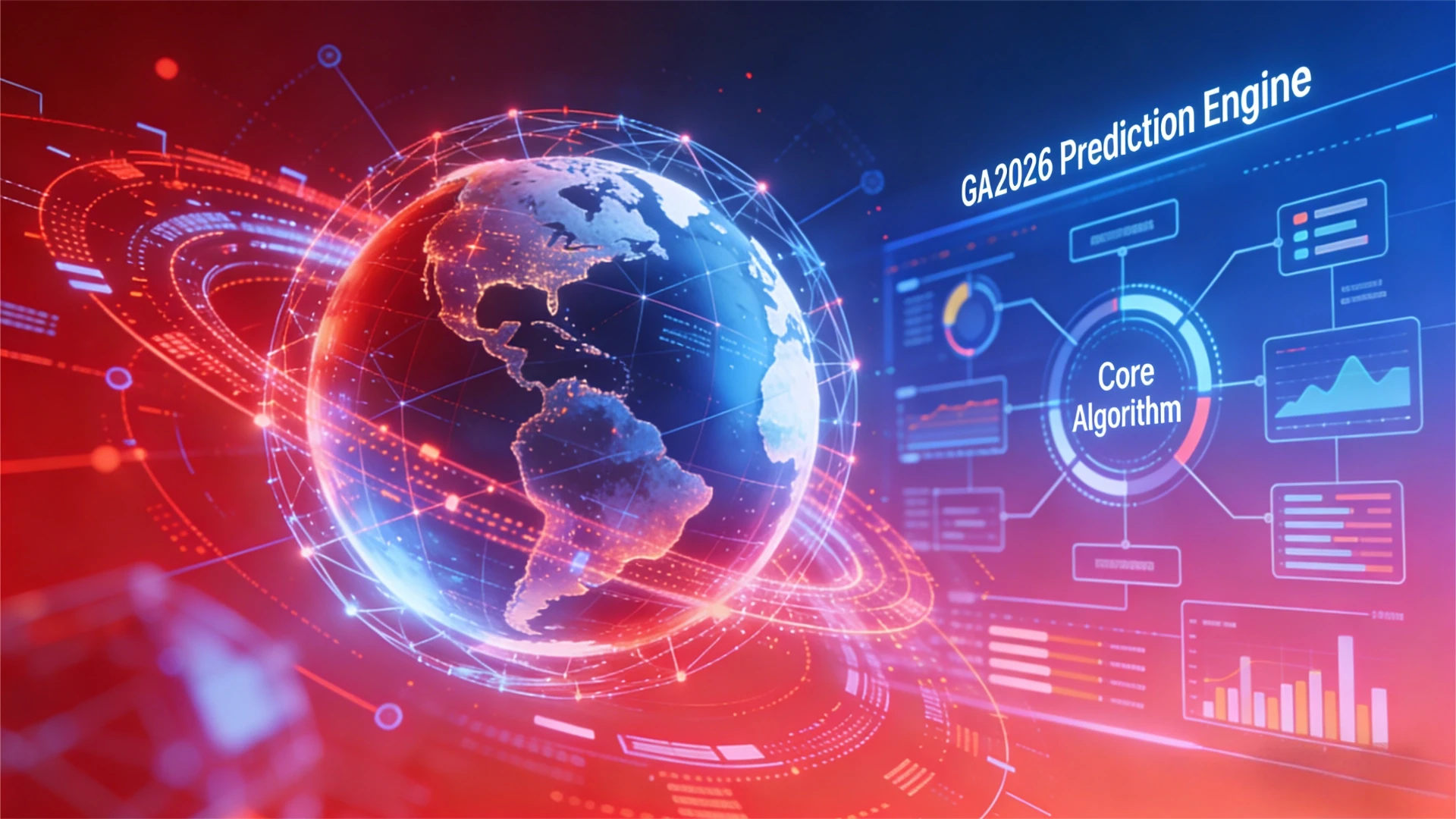
By 2026, GA evolves into a prediction engine: prioritize data governance, and embrace AI-human symbiosis for growth.

xd wang
xd wang
UI/UX Specialist
Framer & Aura template expert Helping founders launch websites in 7 days. Google-certified UX designer focused on high-conversion templates. Exclusive template
Follow Author
Related Posts
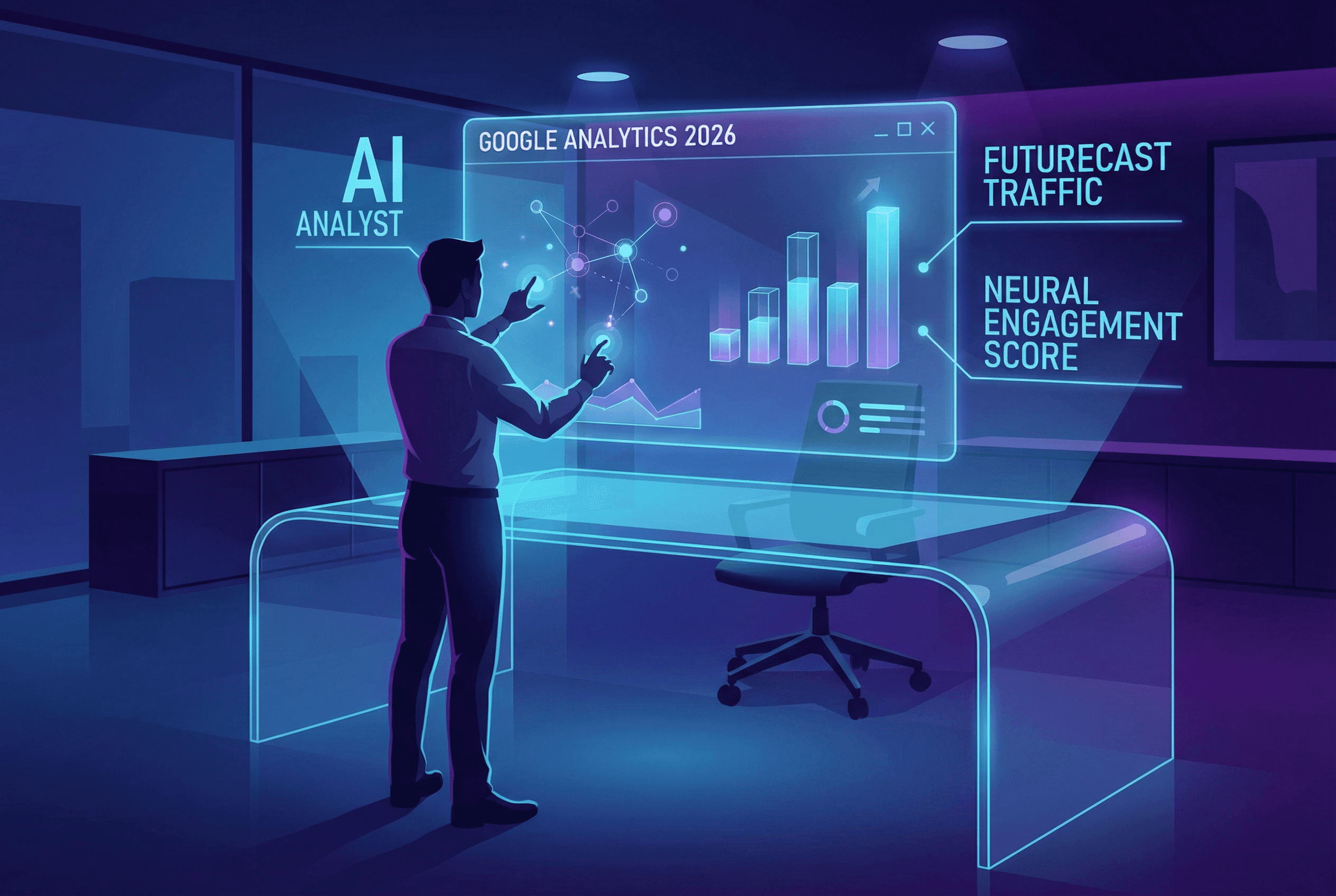
The Dashboard is Dead. Long Live the Oracle.
Remember the sheer panic of 2023? The collective groan of marketers everywhere when Universal Analytics was sunsetted? We clung to our bounce rates like a toddler to a security blanket. But looking back from the vantage point of the approaching 2026 horizon, that transition wasn't just a software update; it was an intervention.
We were addicted to vanity metrics. We were obsessed with "what happened." Today, and certainly by 2026, the only question that matters is: "What happens next?"
If you are still using Google Analytics (GA) merely to check how many people visited your blog yesterday, you are using a supercomputer to calculate a tip. By 2026, the tool formerly known as a reporting interface will have fully metamorphosed into a Marketing Prediction Engine.
Let’s dismantle the current state of affairs and reconstruct what a winning strategy looks like in the near future.
From "Rear-View Mirror" to "GPS Navigation"
The fundamental shift in the marketing landscape—one that has been accelerating since the introduction of GA4—is the move from descriptive analytics to predictive and prescriptive analytics.
In the "old days" (read: 2022), you would look at a report, see that traffic dropped on Tuesday, and spend Wednesday trying to figure out why. In the 2026 landscape, the system doesn't just tell you traffic might drop; it tells you why it will drop and suggests three campaign adjustments to prevent it before you’ve had your morning coffee.
This isn't sci-fi; it's the maturation of the machine learning seeds planted in GA4. The "Purchase Probability" and "Churn Probability" metrics were just the appetizers. The main course is Automated decision-making.
The Death of the "Average" User
We used to aggregate data because we had to. We talked about "User Buckets" and generic demographics. But as we move toward 2026, the granularity of behavioral modeling allows for Hyper-Personalization at Scale.
The system no longer just sees "Male, 25-34, interested in Tech." It sees a sequence of intent signals:
Watched 50% of a video (Data Stream event).
Scrolled to the pricing section (Custom Event).
Hesitated for 4 seconds on the "Enterprise" plan.
In 2026, the marketing response to this isn't a retargeting ad served three days later. It is the website dynamically changing its headline in that exact session to address enterprise concerns.

The Funnel is No Longer Linear (Was It Ever?)
Let’s look at the visualization above. The traditional marketing funnel—Top, Middle, Bottom—is a cute concept we tell interns so they don't get overwhelmed. In reality, the customer journey is a chaotic mess of touchpoints.
By 2026, cross-platform attribution isn't a "nice to have"; it is the oxygen of your strategy.
The Structure Still Matters
Despite the AI wizardry, the boring stuff—Account Structure and Data Collection—remains the bedrock. As noted in your foundational materials, the hierarchy of Account > Property > Data Streams is critical. If you mess this up, you are feeding poison to your AI.
In 2026, "Data Governance" is the sexiest term in marketing. Why? Because Privacy-Centric Measurement has created a world where observed data is scarce. We are relying on modeled data to fill the gaps left by the death of third-party cookies and stricter consent modes.
If your Dimensions (the attributes of your data) and Metrics (the quantitative measurements) are not standardized across your properties, the AI cannot model the missing pieces effectively. You simply get a blank spot where your attribution should be.
The "Black Box" Trust Issue
Here is the provocative part: Marketing in 2026 requires a leap of faith.
We are moving away from deterministic tracking (where we know 100% that User A clicked Link B) to probabilistic modeling (where Google says, "Based on 10,000 signals, we are 95% sure User A converted because of Campaign C").
For the control freaks among us (and let’s be honest, that’s most marketers), this is terrifying.
But consider the alternative: partial blindness. The strict privacy regulations of Europe and California have made "perfect" tracking illegal. The "Black Box" of Google's AI is the only way to see the full picture. The winners in 2026 will be the ones who learn to steer the Black Box rather than try to deconstruct it.
Actionable Insight: The New Dimension of "Value"
In the past, we optimized for "Clicks" or "Conversions." In the future, we optimize for "Predicted Lifetime Value (pLTV)."\ Instead of bidding to get a user to buy a $10 item today, the algorithms bid to acquire a user who looks exactly like the cohort that spends $500 over two years. This requires a shift in mindset from "Efficiency" (low CPA) to "Growth" (high ROI over time).
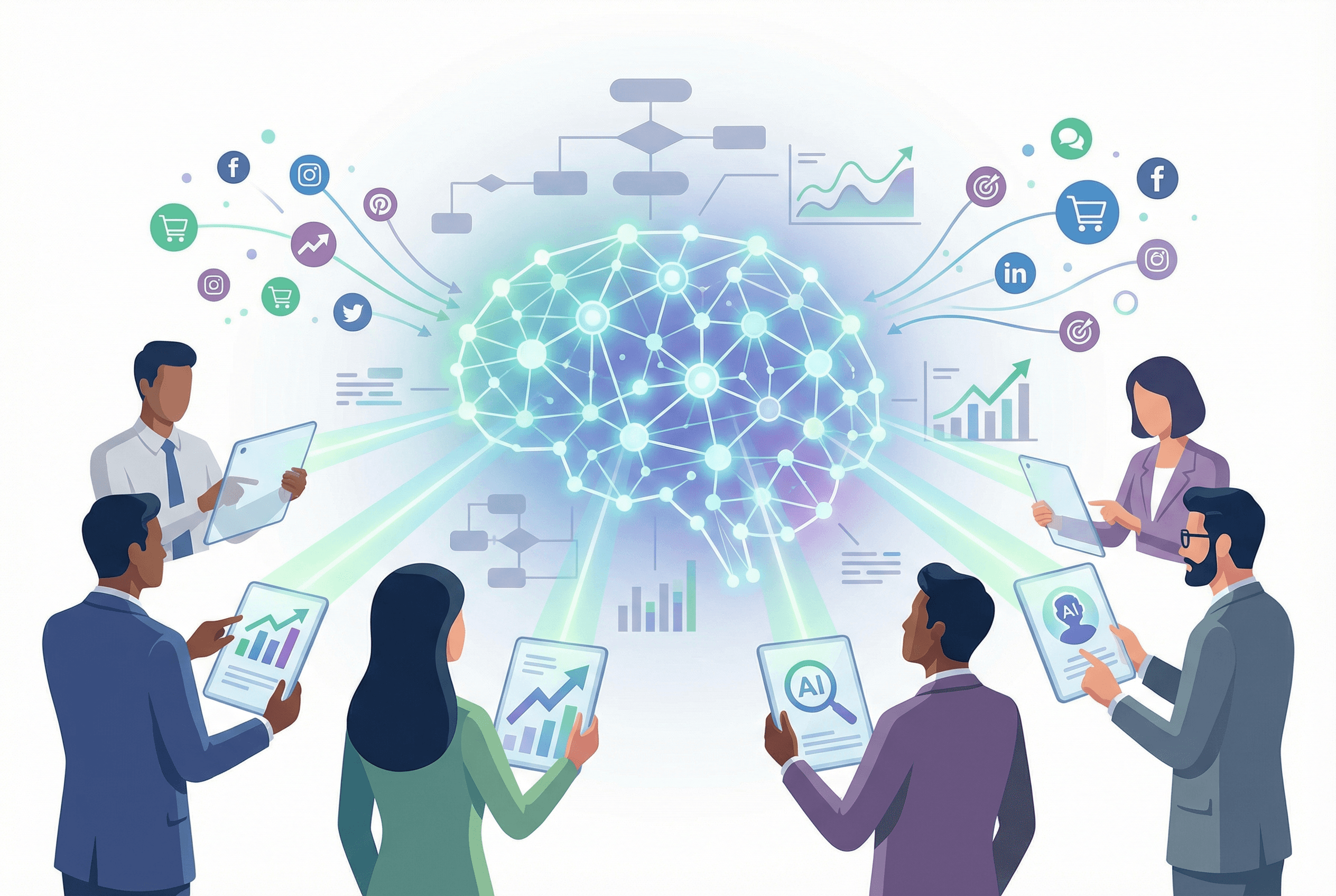
The Human-AI Symbiosis
Look at the illustration above. Notice the humans aren't gone? They are just doing different things.
By 2026, the role of the "Digital Analyst" will effectively disappear. It will be replaced by the "Data Strategist."
You won't be building reports. The AI builds the reports. You won't be setting up basic event tags manually (auto-detection will handle 99% of that).\ Your job will be:
Asking the right questions. (e.g., "Why is our churn probability spiking in the EMEA region?")
Contextualizing the answers. (e.g., "The AI sees a drop, but it doesn't know a competitor just launched a promo.")
Creative Strategy. (e.g., "The data says this audience is bored. AI can't write a funny joke or design a heart-wrenching video. I can.")
Preparing for 2026: A Checklist for Today
If you want to be ready for this future, stop treating GA like a scoreboard and start treating it like a laboratory.
Clean Your Room: Audit your account structure. Are your properties logical? Are your data streams distinct? (Reference your board notes on Account and Property Creation—get this right or nothing else works).
Learn the Language: Understand the difference between a Dimension (City, Device) and a Metric (Sessions, Revenue). If you don't know the inputs, you can't debug the outputs.
Feed the Machine: Set up User Data Collection properly. Ensure you are passing high-quality first-party data (hashed emails, phone numbers) where compliant. This is the fuel for the modeling engine.
Embrace the Prediction: Start using the "Predictive Audiences" feature in GA4 today. Create an audience of "Likely 7-day purchasers" and target them. See what happens. It feels like magic, but it’s just math.
Conclusion
The future of Google Analytics isn't about more charts. It's about less noise and more signal.
By 2026, the interface might essentially be a search bar that says: "How can I help you grow today?" And when you ask, it won't give you a table of numbers. It will give you a plan.
The marketers who survive won't be the ones who are best at Excel. They will be the ones who are best at translating business goals into data inputs, and AI outputs into human experiences.
So, stop mourning Universal Analytics. The future is much brighter, even if it is a little bit more mysterious.
#WebDesign
UX/UI
#Framer
Impact-Site-Verification: 338ad259-3a0b-476c-a467-cb119844ba7d