
2025 Website SEO Master Guide: Make Your Site Stand Out, Keyword Optimization, SEO Path

xd wang
xd wang
UI/UX Specialist
Framer & Aura template expert Helping founders launch websites in 7 days. Google-certified UX designer focused on high-conversion templates. Exclusive template
Follow Author
Related Posts


No matter how beautiful your website is, it's useless if no one sees it.
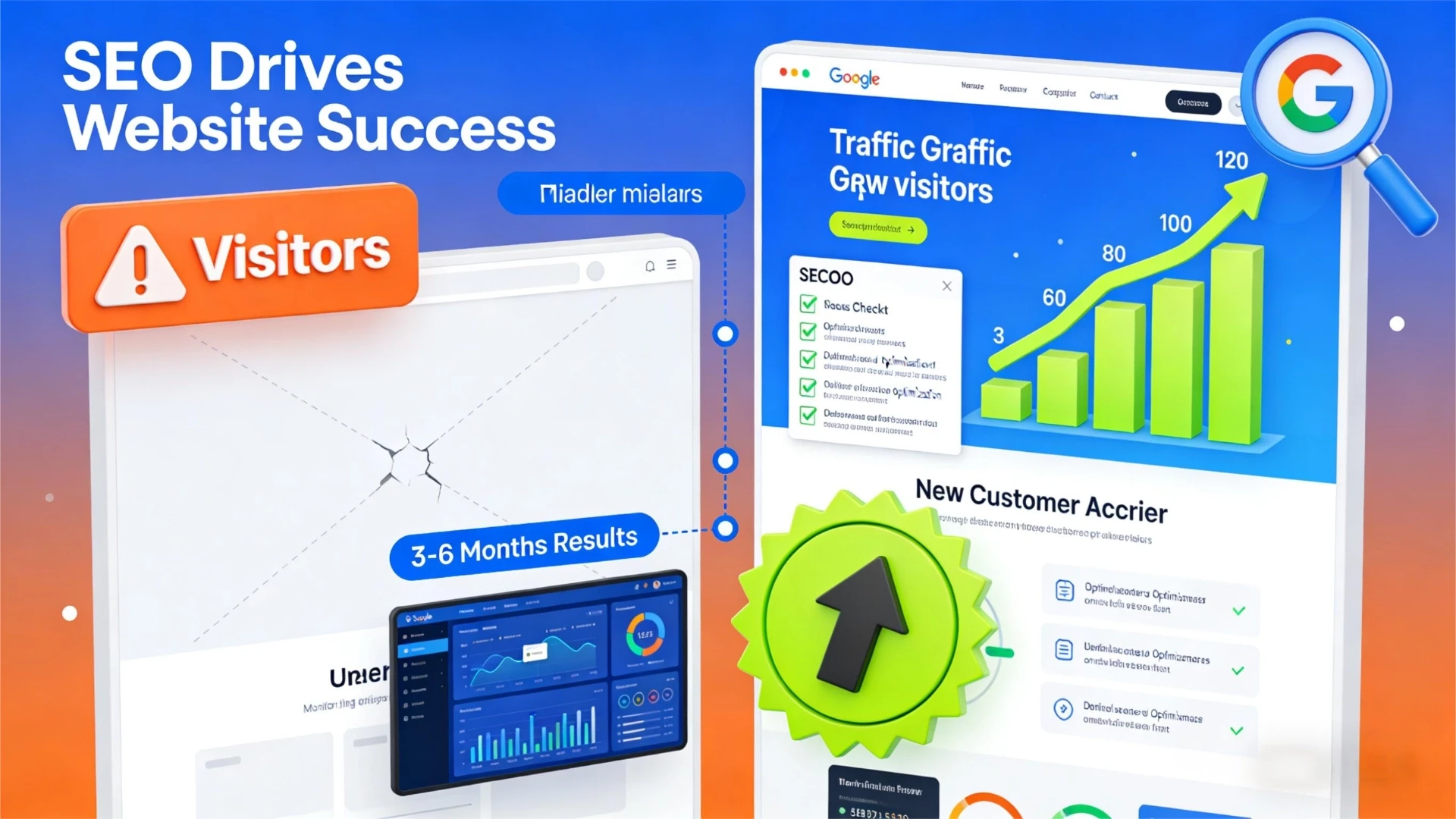
Three months ago, a friend of mine spent 20,000 yuan to have a beautiful portfolio website built. The design is great, the interaction is smooth, and the loading speed is fast.
But three months have passed, and Google Analytics shows that there are only 3 visitors per day, and 2 of them are himself.
This is the cruel reality faced by 99% of websites today—it's not that your content isn't good enough; it's just that no one can find you at all.
If you're also worried about your website traffic, congratulations, you've found the right article. Next, I'll use the most straightforward language to tell you how to move your website from the 10th page of Google search results to the 1st page.
SEO is not magic; it's science.
Many people have misunderstandings about SEO (Search Engine Optimization). They think it's some kind of black technology or that you need to spend a lot of money to hire an expert.
Actually, it's not.
The essence of SEO is very simple: to help search engines understand what your website is about and then show it to people who are searching for relevant content.
Imagine you open a coffee shop, but there's no sign at the door, and it can't be found on Google Maps. Do you think anyone will come in? SEO is like putting up a sign, marking the address, and writing the business hours for your website so that people who need you can find you.
How do search engines "see" your website?
Here's a key realization: search engines "see" websites in a completely different way from humans.
When humans look at a website, they look at the design, colors, and layout. But search engines are "blind"; they can only understand:
What the page title says
Whether the URL structure is clear
Whether the heading hierarchy is reasonable
What the image descriptions say
Whether the overall content organization is logical
So you'll find that some websites with ordinary designs rank high, while some websites with beautiful designs go unnoticed. Because search engines care about structure and meaning, not visuals.

It's 2025. Mobile-first is not an option.
If your website loads slowly or has a messy layout on mobile phones, I advise you not to rush into doing SEO.
Because Google now uses mobile-first indexing.
What does this mean? Google's crawlers will first look at the mobile version of your website. If the mobile version has a poor user experience, it won't matter how good the desktop version is.
I've seen too many cases where a website looks gorgeous on the desktop, but on an iPhone, the font is so small that you have to zoom in three times to read it, the buttons are crowded together, and the images take ages to load. Google will directly lower the ranking of such websites.
Mobile-first is not a trend; it's a reality. Now, more than 60% of searches come from mobile devices. If you don't optimize the mobile experience, you're giving up most of your traffic.
SEO and accessibility: A two-birds-with-one-stone strategy
This is a point that many people overlook: if you do a good job in accessibility, your SEO will naturally improve.
Why? Because the goals of both are the same—to make the content clear and easy to understand.
When you add descriptive alt text to images, screen readers can read it to visually impaired users, and Google can also understand what the image is about.
When you use the correct heading tags (H1, H2, H3) to organize your content, keyboard navigation users can quickly jump around, and search engines can also understand the hierarchy and key points of the content.
When you write clear button text like "Download the full guide" instead of "Click here", everyone benefits.
"If your content isn't purely visual, don't make it only understandable visually."
This is my deepest understanding of SEO over the years. Describe clearly and mark accurately, and both humans and machines will thank you.
Heading hierarchy: Your content needs a skeleton
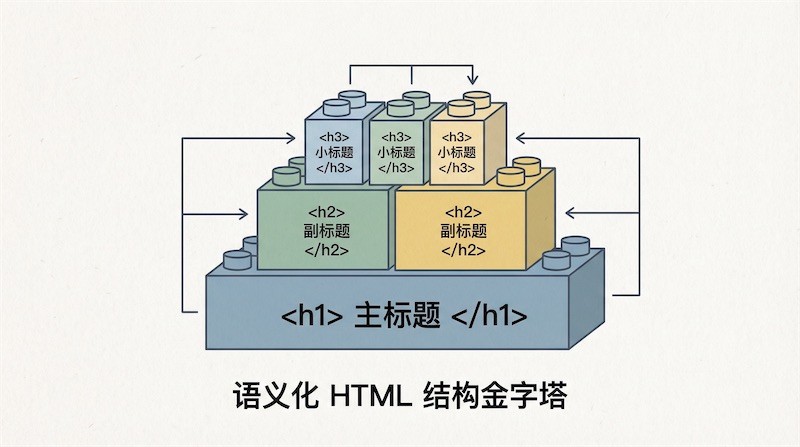
If I could only give you one SEO tip, it would be: get the heading hierarchy right.
Imagine a web page as a book:
H1 is the book title — There should be only one on each page, clearly stating what the page is about.
H2 is the chapter title — For dividing the main content.
H3 is the sub-section — For sub-topics under a chapter.
H4 - H6 — For deeper levels (rarely used).
Never skip H2 and directly use H3 just because "the H2 font is too big". Search engines don't care about font size; they care about logical structure.
The correct approach is:
Use H2 to mark real chapter titles.
Then adjust the font size in CSS to your liking.
I've seen many websites with only one H1 on the whole page and then just ordinary paragraph text. It's like a book without a table of contents; both readers and search engines will get lost.
Common mistakes vs. Correct practices
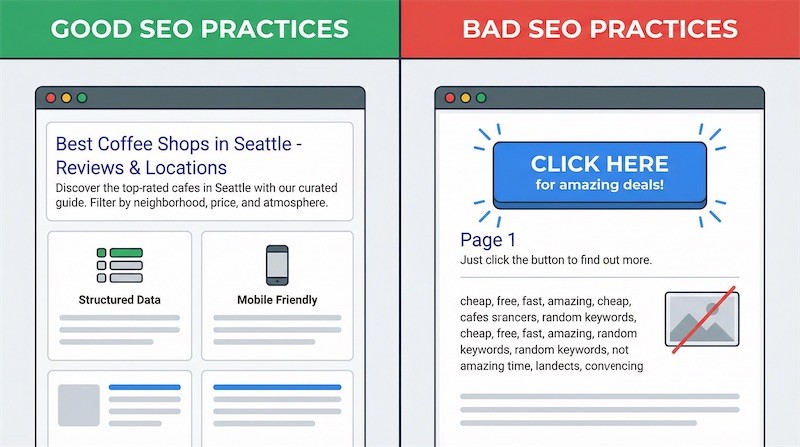
Let me use a few comparisons to help you develop an intuition:
❌ Incorrect page title
```Plain Text Homepage - My Website
Plain Text Project Management Software - A Collaboration Platform Designed for Remote Teams
Plain Text IMG20241202final_v3.jpg
Plain Text A developer writing code in front of a laptop
Plain Text Click here | Learn more | Read more
Plain Text Download the free SEO guide | View pricing plans | Schedule a free consultation
```
See the difference? Specific, clear, and direct. This is the core of SEO.
Action checklist: 5 things you can do today
If you want to start optimizing right now, follow this order:
1. Check the basic settings of each page ✓
Each page has a unique, descriptive title (within 60 characters).
Each page has an attractive description (about 150 characters).
The URL is concise and clear, with words separated by hyphens.
The browsing experience on mobile is smooth.
2. Organize the content structure ✓
Each page has only one H1 as the main title.
Use H2 to divide the main chapters.
Use H3 for sub-section titles.
Don't skip heading levels.
3. Optimize images ✓
Each image has descriptive alt text.
The image size is compressed (without sacrificing quality).
Decorative images can have empty alt text.
4. Improve links and buttons ✓
Replace all "Click here" with specific descriptions.
Ensure that the link text describes the target content.
Add ARIA labels to icon buttons.
5. Set up website-level configurations ✓
Register your website on Google Search Console.
Set the website language.
Configure social media sharing images.
Enable the "Reduce motion" option.
SEO is a marathon, not a sprint
Publishing a website is not the end; it's the beginning.
SEO requires continuous optimization and monitoring. Just like fitness, you can't get abs by going to the gym once; it takes continuous effort and adjustment.
My advice is:
Month 1: Complete all basic optimizations and submit your website to Google Search Console.
Month 2: Observe the data to see which pages are getting traffic and which ones aren't.
From Month 3 onwards: Adjust your strategy based on the data and optimize the underperforming pages.
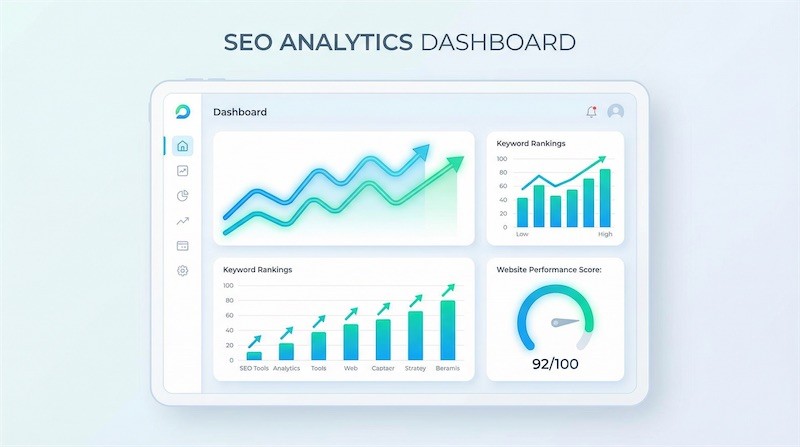
Use Google Search Console to track:
Which keywords are driving traffic.
Which pages are rising in the rankings.
Whether there are any crawling errors.
How mobile-friendly your website is.
Remember: It takes time for rankings to improve. Usually, it takes 3 - 6 months to see significant results. Don't give up after a week if you don't see any changes.
In conclusion: SEO is a long-term investment
Let's go back to the story of that friend at the beginning of the article.
After listening to my advice, he spent two weeks re-optimizing his website: he changed the page titles, rewrote all the button text, added detailed descriptions to each portfolio image, and reorganized the content structure.
Three months later, his daily visitors increased from 3 to 120, and he got his first client through the website, with a project worth 50,000 yuan.
SEO isn't magic, but it's a must for modern websites. You don't need to be a technical expert; you just need to:
✨ Express your content clearly
✨ Organize your structure correctly
✨ Monitor and optimize continuously
If you haven't started doing SEO, today is the best time to start. If you're already doing it, congratulations, you're on the right track.
Your website deserves to be seen. Start taking action now! 🚀
If this article is helpful to you, please share it with more people who need it. If you have any SEO questions, feel free to discuss them in the comments.
#WebDesign
UX/UI
#Framer
Impact-Site-Verification: 338ad259-3a0b-476c-a467-cb119844ba7d